Japan Trip 4 - In the Mountains
Dear Eduardo,
I think I deserve some kind of award. I managed to travel through Tokyo for eleven days and never once took the wrong train by accident. I budgeted extra time in most of my trips, in case I needed to get on the train going the other way. It was a mistake I never ended up making. Yes, I used my phone like it was my oxygen tank at 100m down, but I figured at one point I’d slip up and anyone who’s familiar with my brain would back me up on that assumption. I credit the phone, but also just how well designed the transportation is here. The Japanese have a concept of punctuality that’s rooted deep in their culture. Perhaps that’s why all the trains run on time, but the outcome means that even if you leave the office at 5:00pm rush hour, you’ll still get home around the same time (you’ll just be in a more packed subway car).
Shinkansen
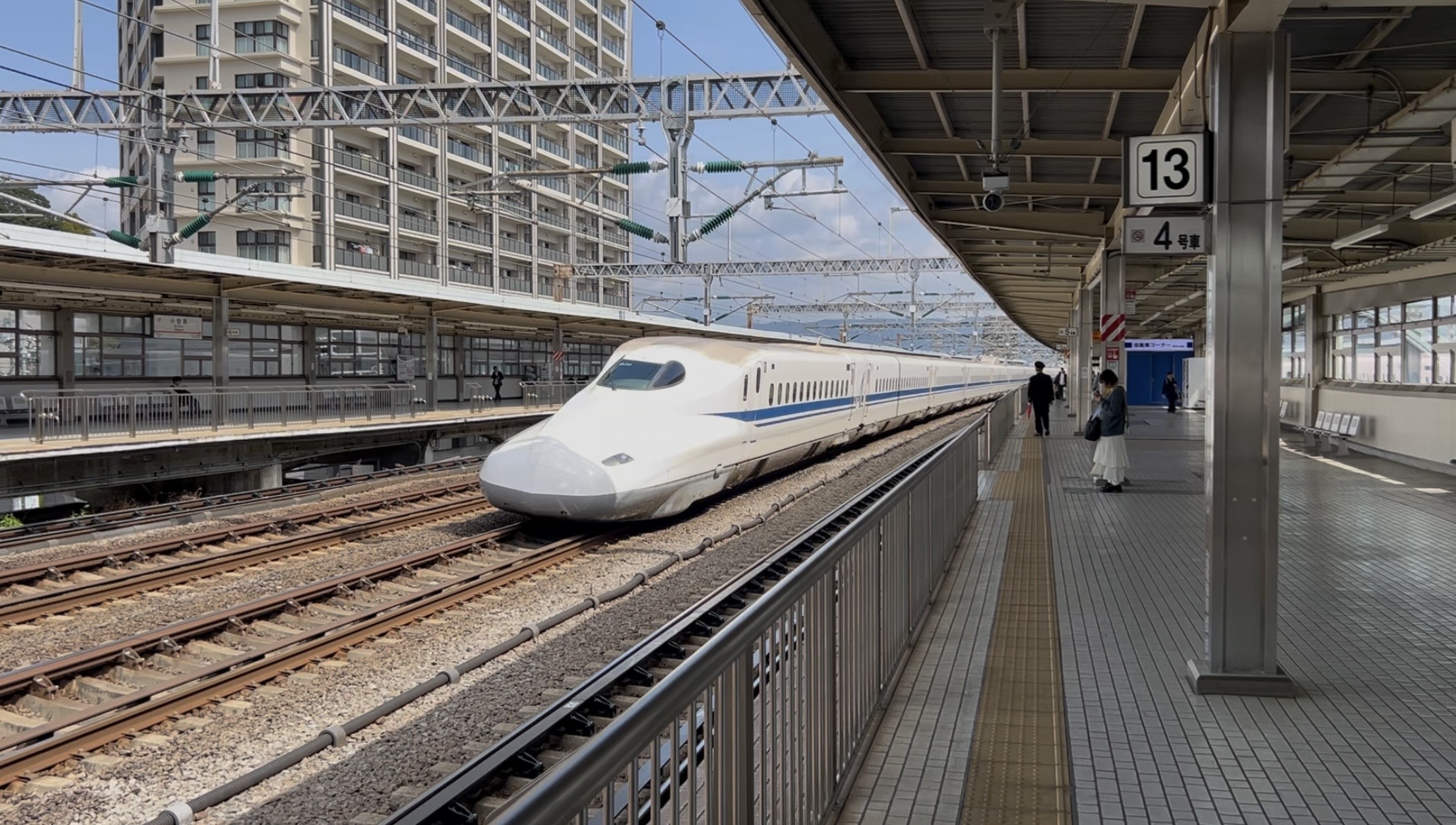
Being from Texas, my state legislators would have me believe that the Shinkansen––known as the “bullet train” there––is eastern propaganda designed to take my cars away. I knew it wasn’t that bad, but I was wholly unprepared with the experience riding this thing as a method of medium-distance travel. Let’s compare what it would be like to travel between two cities of comparable driving time between Japan and the US to illustrate.
Trip A: San Francisco to Burbank
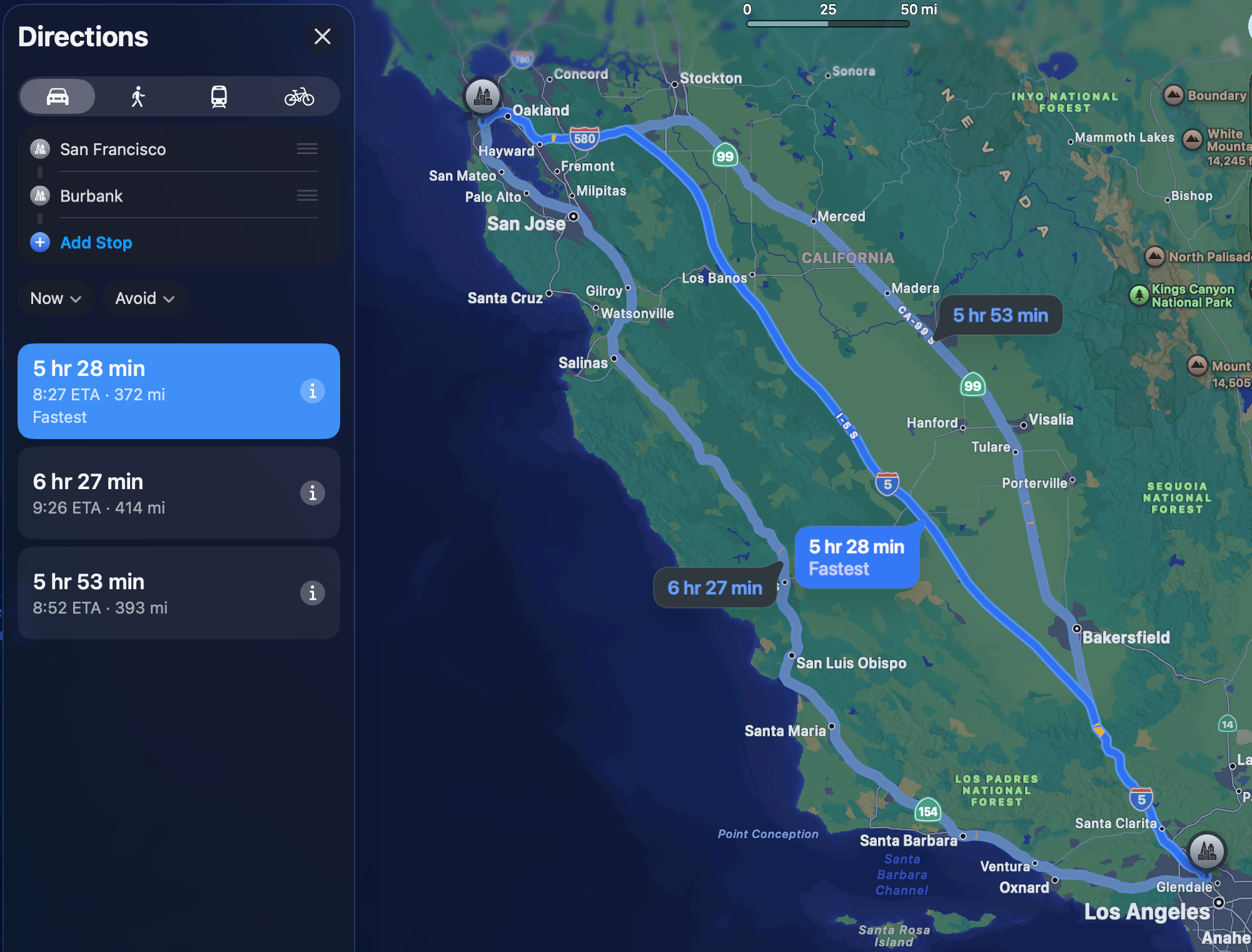
The driving time on a weekend day between San Francisco and Burbank is about 5.5 hours. That’s a long drive, but is the alternative worth it to go through SFO and fly instead? Typical flight time between them is around an hour and 15 minutes, but when you add on the “getting to the airport with at least an hour before board time” tax, and a 30 minute commute from both SFO and Bubank airports, that’s about 4.5 hours door-to-door. So flying doesn’t save you much time. Not to mention the hassle of dealing with security lines and keeping to a strict timeline and how far in advance you should book your tickets… spur-of-the moment weekends between these two cities isn’t super common as a result.
Trip B: Tokyo to Kyoto
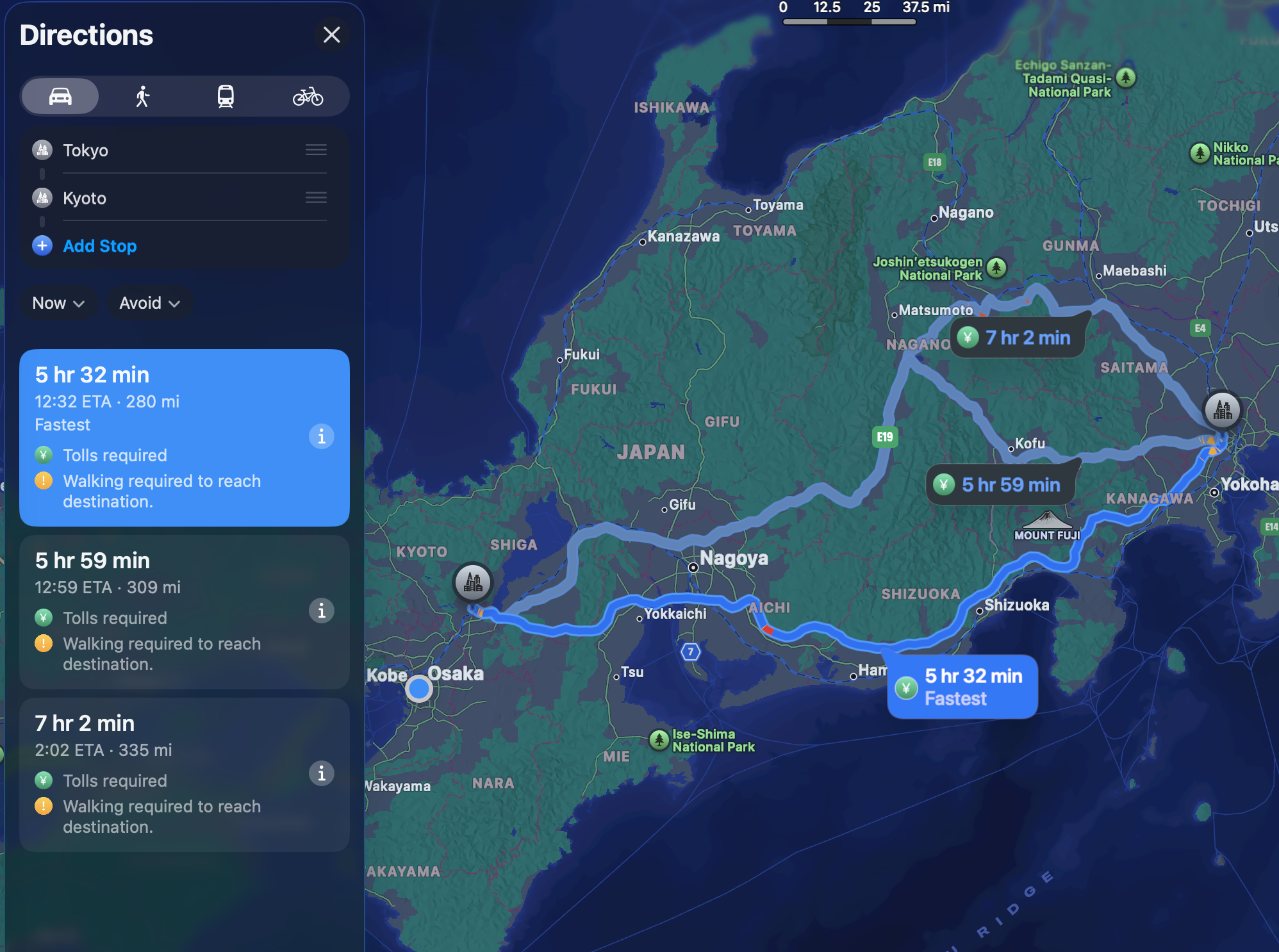
At about 5 hours and 30 minutes, it’s the same driving time despite being a bit shorter distance. This trip requires you go through some big cities along the way, including Yokohama and Nagoya, so driving is gonna be a headache of repeated stops. You could fly, but that would be about the same story as the California flight and all that planning/security/commuting is no less a headache even if everything is on time.
But wait, there’s a magical 3rd option in Japan that changes the game. The Shinkansen will take you on this trip for about half the cost of flying in two hours and seven minutes. The best part? It’s about as stressful as taking a particularly-comfy subway train. I showed up for my train with 8 minutes to go before departure time. 8 minutes??? Can you imagine if I showed up to the San Francisco airport with 8 minutes before my flight leaves? I don’t even think I’d make it through security before the folks at the desk say “eehhhh you should re-book.” Re-booking might incur fees and days of wait time. The door to the plane is probably already closed, and my weeks or even months of planning are severely damaged if not ruined completely. It’s a disaster to show up with 8 minutes to go.
But in Shinagawa station, I had time to get myself a coffee and toss it back before heading down to the platform. The train zipped in like a spaceship floating on ice and the doors opened for about 90 seconds before closing. I didn’t even get settled into a seat by the time we started moving, and I had rows upon rows of options to choose from (I’m a window-seat guy). Getting to the train was the exact same process it was to get to a subway platform: put my ticket in the turnstile and walk through. And when I got to my destination I was already in the city center, not some wild 50 minute drive away (looking at you, Dulles). The absolute bonkers life-changing craziest part: if I missed my train I could just get on the next one, and for this trip that was 45 minutes away. This is the difference between “Oh no, I missed my train! Guess I’ll get lunch,” and “My trip is ruined.” As long as you have the cash to spend on a trip, you and your friends could do SFO to LA for a day trip if you wanted, making spur-of-the-moment weekends with friends or family actually conceivable.
I don’t think most people my age in the US have ever experienced spontaneous travel before. The concept of going to an airport and just seeing where you might go, scanning through departure gates like idly flipping through a menu, feels like a bygone era of romantic movies shot in black and white. But the reality of it can make the whole country feel more knowable. It connects places together in ways we can’t imagine in the states, and we’re unaware of what we’re missing. I’m sold, and I’m going to ask the same stupid question everyone else does upon their return: why can’t we have this here?
Hakone
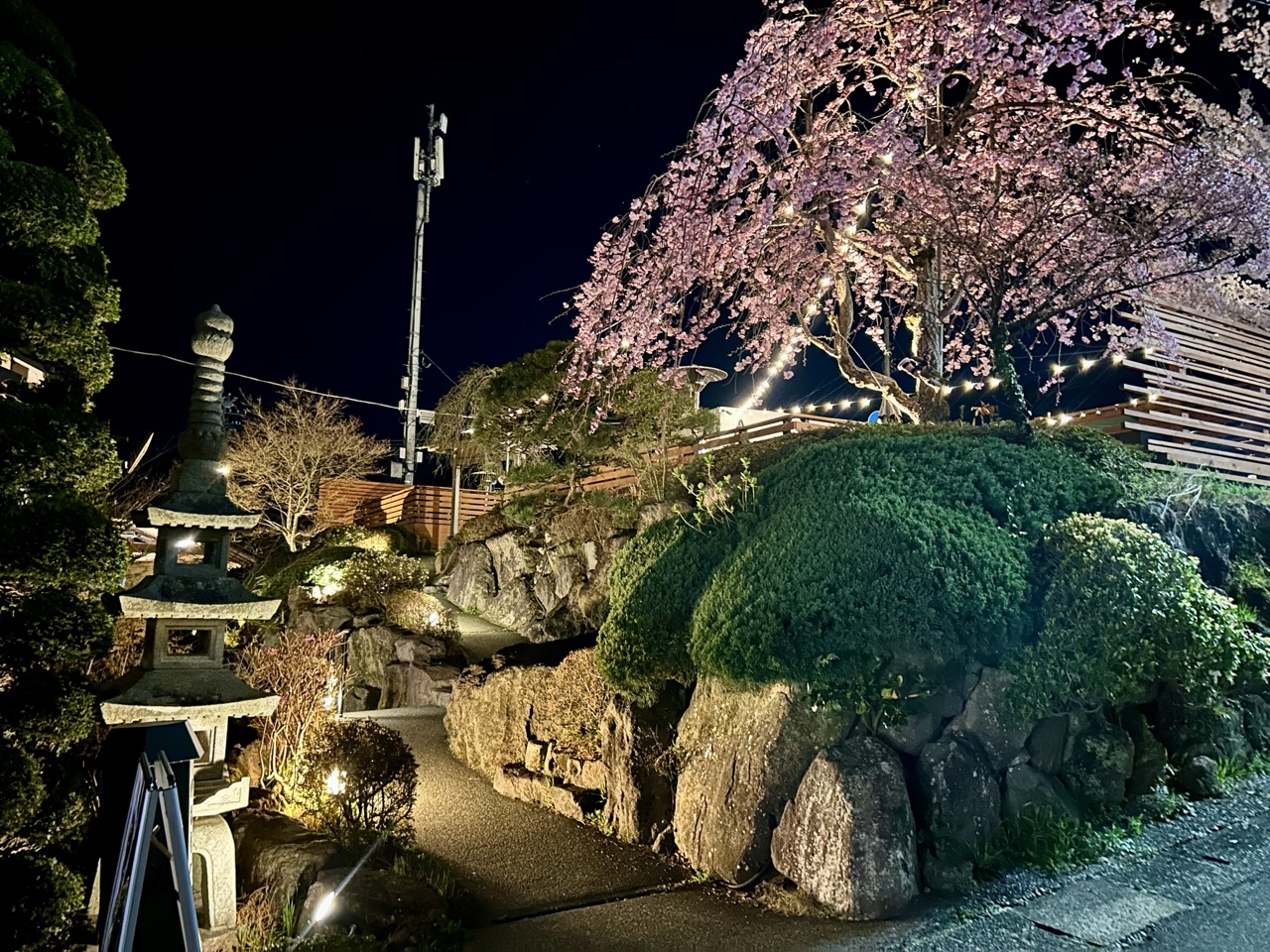
There’s an old road between Tokyo and Kyoto that’s been around for centuries called the Tokaido. Samurai and lords would travel this road that the Shinkansen takes a few hours to crush, but over the course of about a month (depending on conditions). Much of this old road is still there, cutting through mountains and lined with ancient hot-spring resorts called “Onsen” that have been around since those days as well. One of the oldest mountain resort towns is called Hakone, and it’s here I rested my over-stimulated head after weeks in Tokyo.
Onsen culture is a bit jarring for westerners like myself. The bare-bones hotel (called Ryokans) provided Japanese robes called Yukata for the guests to wear in the evenings, and yes we all actually wore them. Onsens themselves were outside my comfort zone, with this amount of nudity only being normal in the YMCA locker rooms, and even then only by the eldest members. The harsh smell of sulfur penetrated the walls and into any clothes brought inside, making the Yukatas worth the effort to wear around. It felt like a lot to put up with for what a co-worker called a “smelly hotub”.
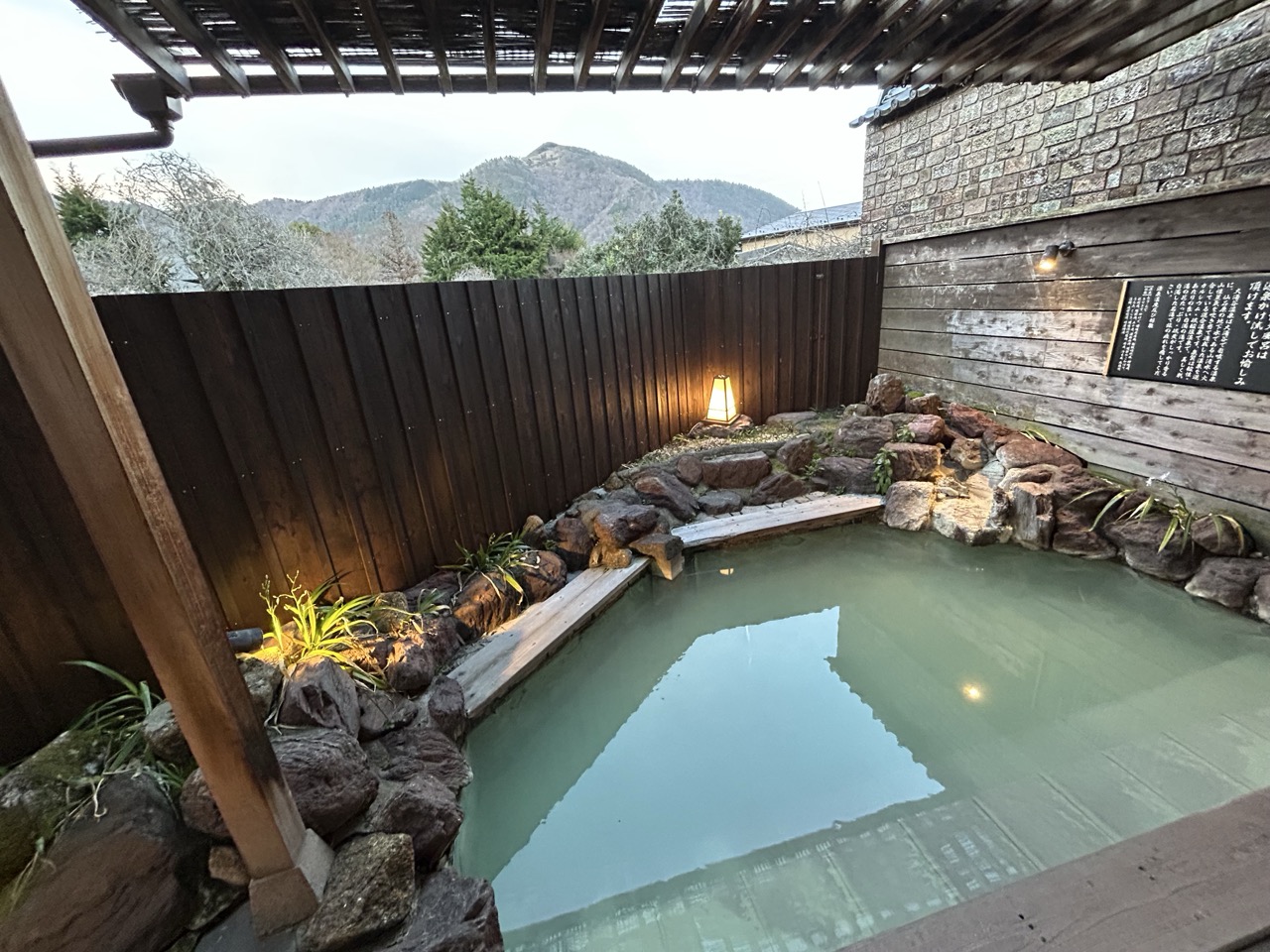
But the moment I sat down inside the hot-spring water I understood what it was all about. A feeling of quietness and stillness soaked into my joints as the light mountain rain pattered the surface. 15 minutes swept by without me thinking about much of anything at all. Normally I get in my head about it, putting pressure on staying in the moment and avoiding distraction. But this reminded me of roadtrips as a 10-year-old in the back of my mom’s car distantly watching trees go by. My mind “clocked down” and time dilated. What I called boredom back then I think I call therapy now.
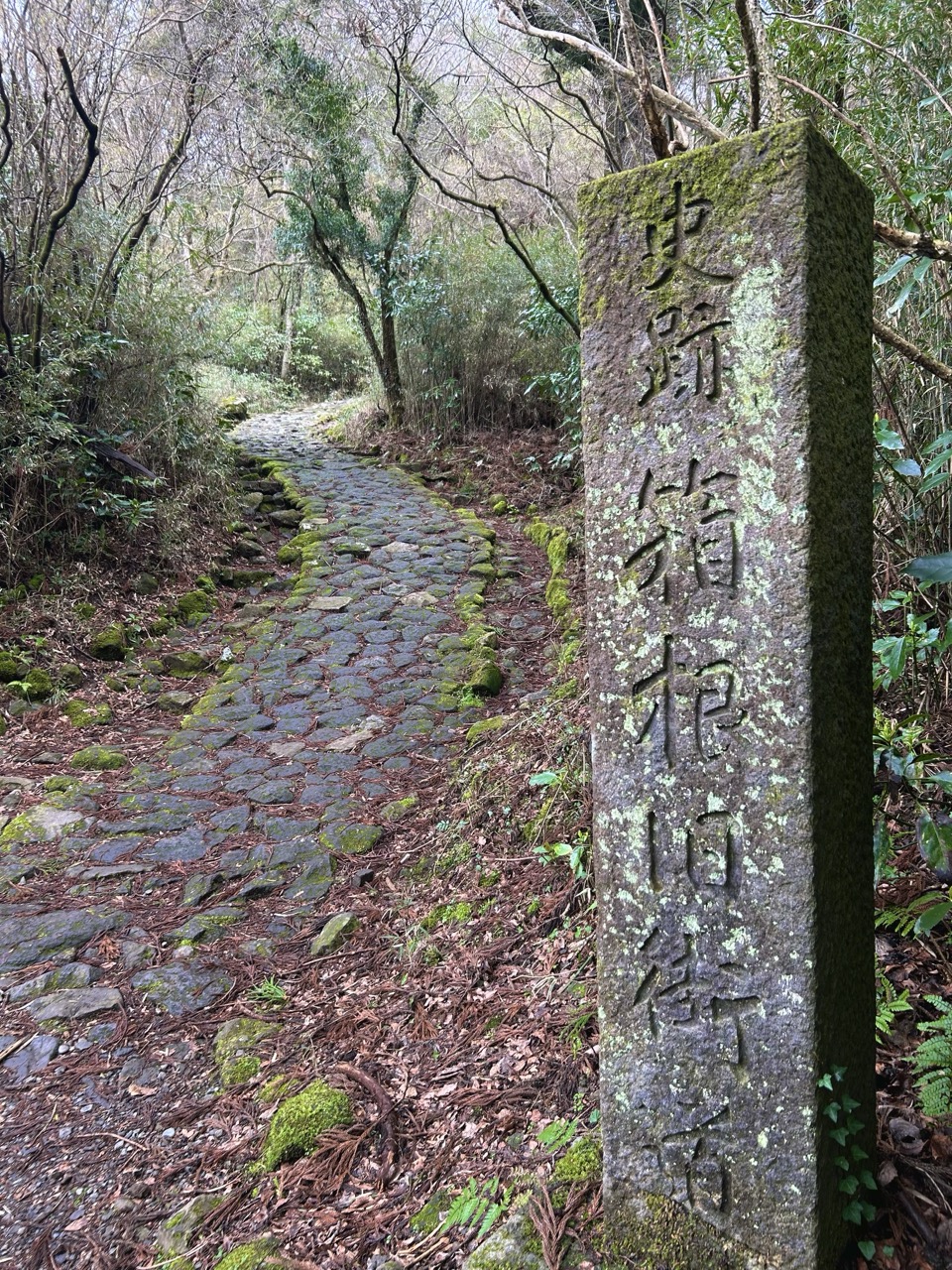
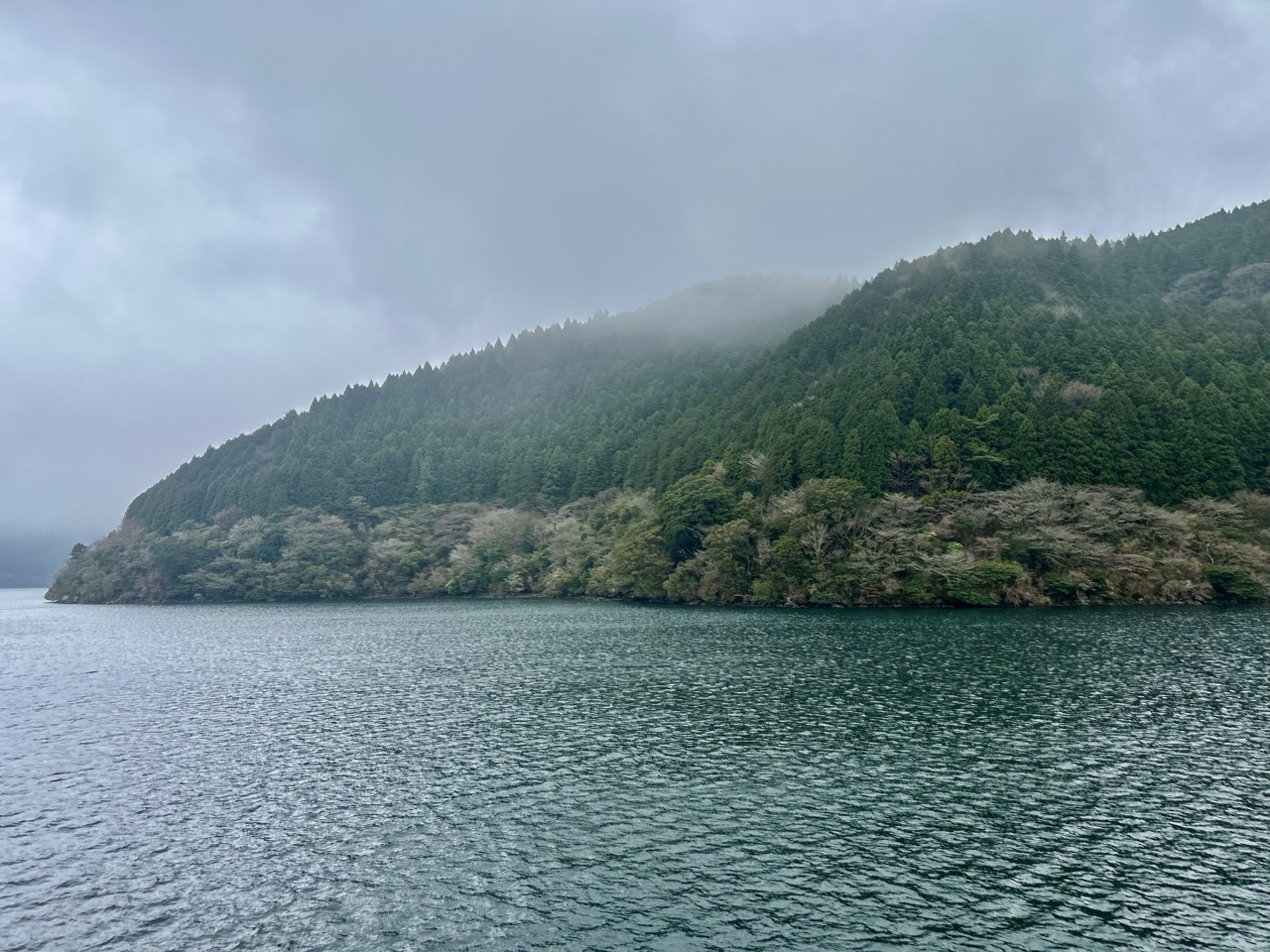
The Tokaido road itself was breathtaking to hike on. “3 hours”, my phone told me. It took me nine. How could I not stop and watch the clouds roll over mountains at highway speed? The ground was moist from fresh spring rainfall and the wind whipping through the thick forest sounded at times like distant jet liners. In retrospect, I probably should have researched how alone I would be on this hike between Motohakone and Goro. This route does have black bears in it, and given it was springtime they’d be coming out of hibernation very hungry. Next time I’ll take some spray, but I appreciated the solitude. The mountains were steep and my legs were burning by the time I got to the top, about 1,000 meters above sea-level. I was feeling pretty happy with myself for climbing a mountain that day.
Not much later, I was shown what real mountains look like.
Fuji
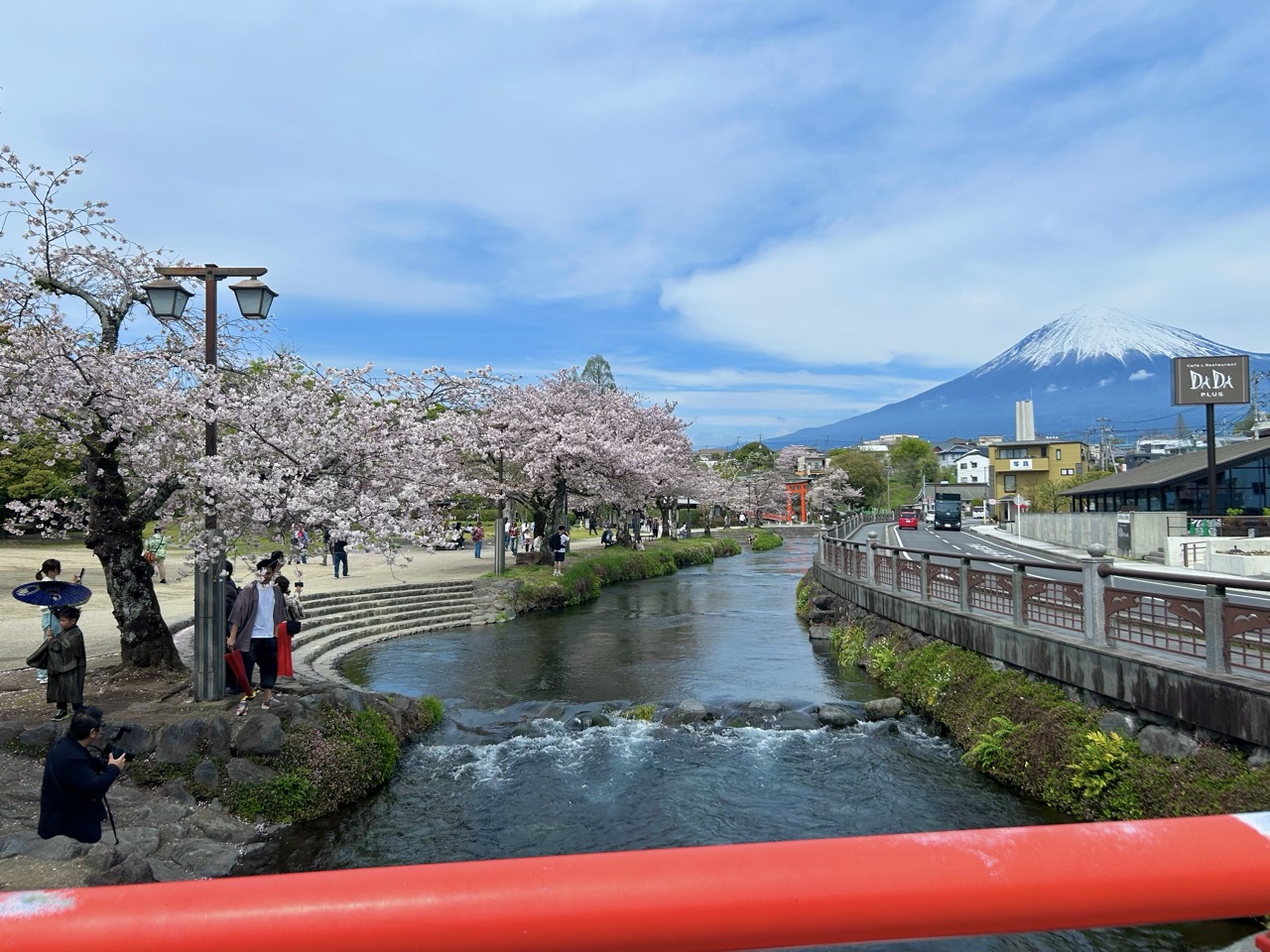
The first time I saw Mt. Fuji appear through dissipating clouds was shocking to me. I didn’t expect it, I had no guide to say “there it is”. Instead, the haze cleared for a moment and in place of green forest I saw snowcapped volcanic rock thirty miles away. This is going to sound odd, but for just a split second under just the right light, I thought it was moving. There was a fatigue-induced split second nightmare where this thing was alive, like a Lovecraftian god-like creature rolling passed other mountains it dwarfed. Mt. Fuji is known as “Fuji-san” in Japan, where ‘san’ (context-dependent) can either literally mean ‘mountain’ or be a suffix to denote a respected person, making foreigners hilariously mistake the translation for “Mr. Fuji”. But there is some truth to the wordplay where Mt. Fuji was once worshipped as a goddess by Shintoists of old. If you, Eduardo, recall back to one of my first letters to you, I asked the question “Should I Personify You?” I found myself wondering the same thing with Fujisan.
It’s not just big and beautiful. I’ve seen mountains like that back home. Mt. Hood, Mt. Rainier, Kachina Peak, and the Flatirons of Boulder to name a few of my favorites. But what makes Fuji different is just how much bigger it is than it’s surrounding area. It’s imposing, like it belongs amongst different mountains somewhere else. It’s about as tall as Kachina Peak in NM, which I’ve been to the top of. But because that mountain is surrounded by the rest of the Rockies, it felt like it belonged there. Mt. Fuji is 12,000 feet tall and here I am staring at it from sea-level. I can feel all twelve-thousand of those feet making the colossus seem like it is looking back at me. I don’t blame the Japanese for personifying it at all.
Kyoto
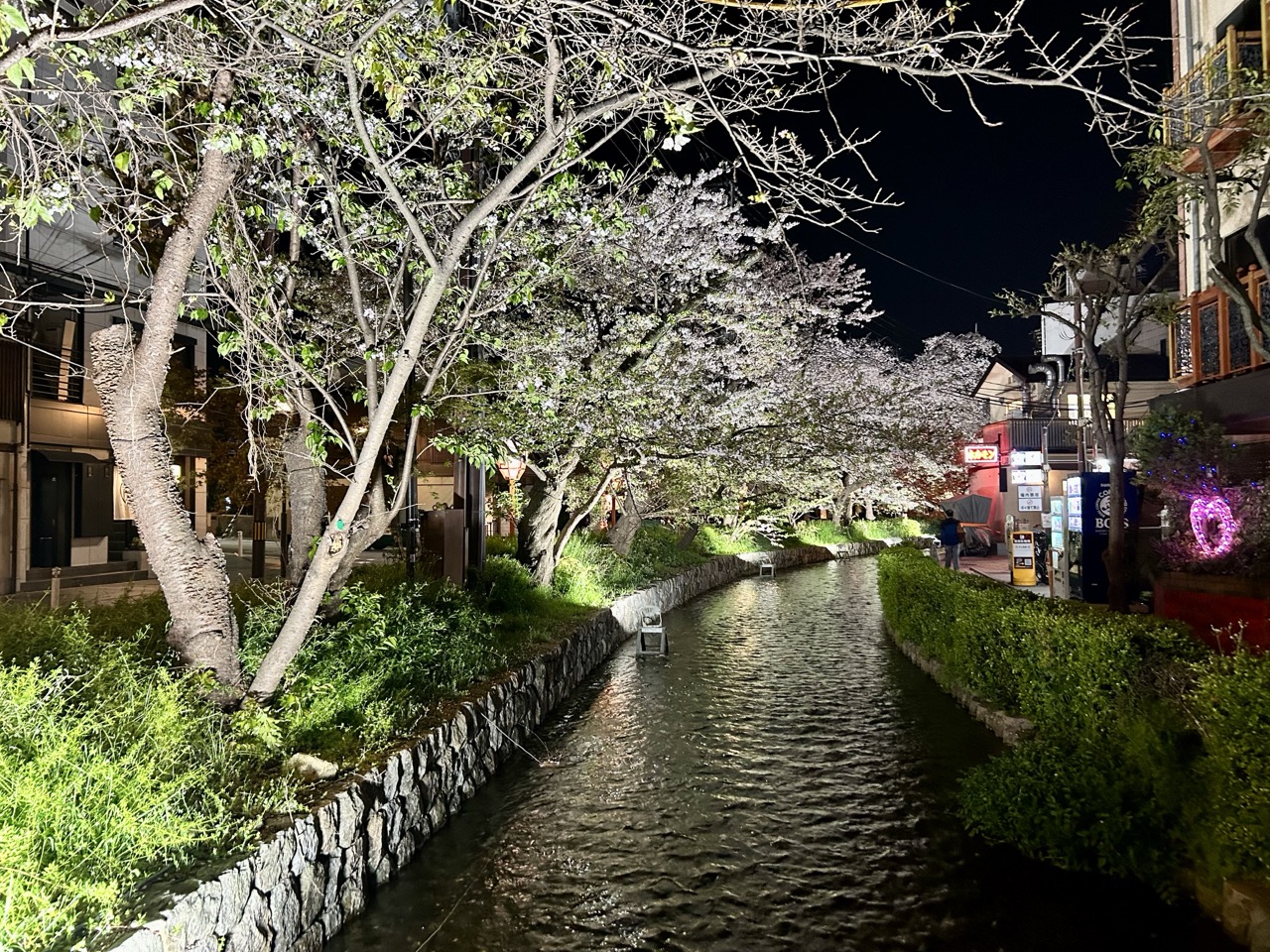
Perhaps my favorite thing about the last week was ending up on the other side of the Tokaido in Japan’s old capital. Sakura trees are in bloom and songbirds called “Japanese Bush Warblers” whistle at me as I hike between them, pushing me another step closer on my inevitable transformation into a birder eventually. I’m gonna be middle-aged and white someday, it’s inescapable. The shrines and zen gardens here are even older than the ones I saw in Tokyo, and the juxtaposition between all this ancient preservation and getting here on a bullet-train is jarring. Somehow the Japanese were able to build for themselves a marvel of engineering unlike anything I could hope to see in the US without losing the history that makes the trip interesting in the first place.
I think about places like Downtown Kansas City MO, or the old Madison Square Garden, both of which we defaced or demolished in the name of new infrastructure like highways or train stations. This isn’t to say the Japanese didn’t knock down anything of value when they built the Shinkansen, but as a foreigner it looks to me that they avoided giving up their most valuable places, and were able to get something incredible for the effort. What I want isn’t just the ability to spontaneously travel on a bullet-train, nor is it the preservation of our earliest and most valuable places. What I really want is a way to ensure that the decisions we make now age as well as theirs seem to. I want a way to arrive at a distinction between expendable waste and preservable history that future generations won’t mock us for.

Give us a few more centuries, I think we’ll figure it out.
Comments
Want to leave a comment? to join the conversation.
Leave a Comment
Loading comments...