Japan Trip 3 - From the Locals
Dear Eduardo,
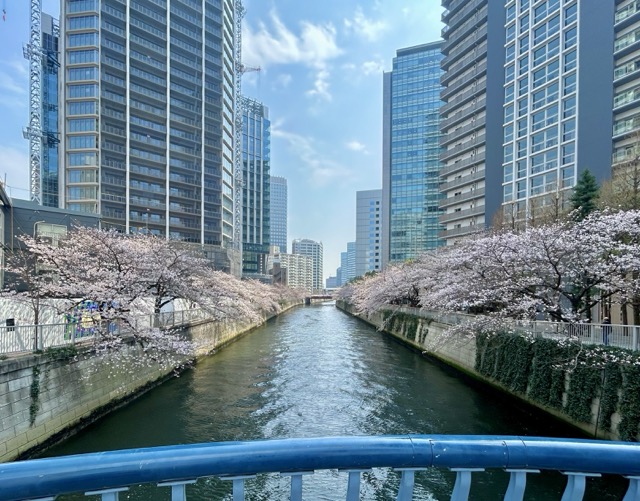
I had to change my hotel reservation for my last night in Tokyo for two reasons. One, because I wasn’t ready to leave the neighborhood of Shimokitazawa just yet, and I’ll get into why a bit later. But the second was because of something my tour guide (who goes by ‘KT’) had said while we were riding bicycles through Meguro City. “See that hotel?” she pointed to a building that looked like a theme-park castle, “it’s a love hotel.” Apparently, when the whole city is living with their parents, it can be hard to find a place to bring a date after a night out on town for some much-needed privacy. Just another complexity in the lives of young folks in Tokyo, I thought. But then, to be safe, I figured I’d check my reservation for my next stop scheduled for Meguro a little more closely. As I looked back through the photos of the rooms and amenities online, I suddenly became hyper-aware of how chic but romantic everything seemed. Then when I saw that the hotel had packages for hours as well as full nights, I realized I’d made a rookie mistake. Nope, time to bail, gonna let some lucky couple score a last-minute deal on that room. But I’m glad I did so because it was a great excuse to extend my stay in the Shimokitazawa neighborhood!
 |
 |
Shimokitazawa
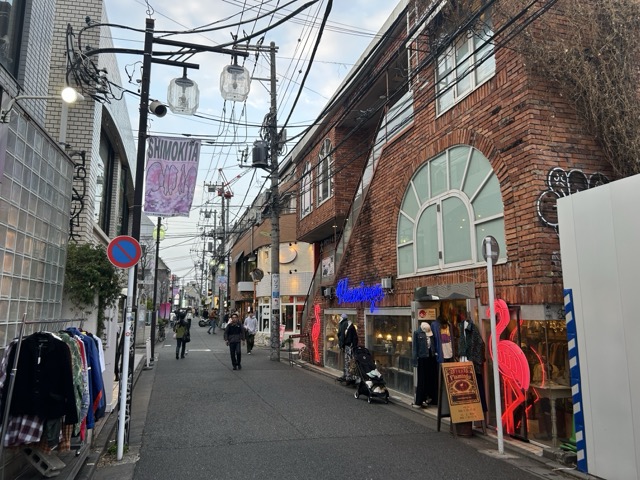
This is the area in which I spent the rest of my time in Tokyo, and I loved it so much it deserves special attention here. “You like Shimakitazawa?” KT asked me when she heard me rave about it. “You must be hipster.” She’s got me pegged, because yes I have some flannel plaid in my suitcase, and yes I love vinyl records and farm-to-table restaurants with goat cheese salads. And this town is absolutely a hipster’s paradise, with coffee shops, book stores, and vintage clothing stores as far as the eye can see.

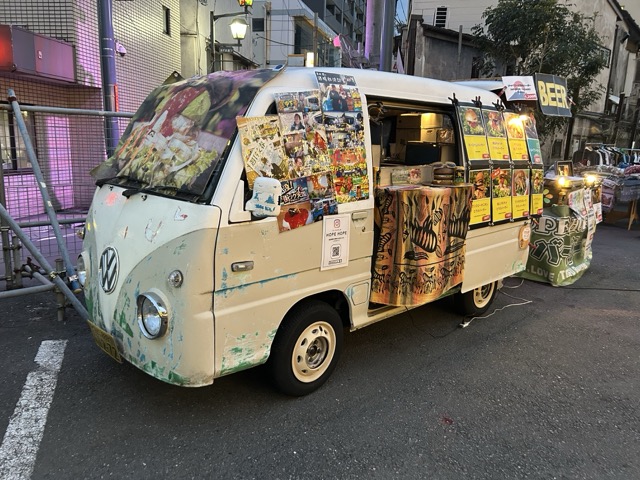
Walking around is a bit like a trip to hipster-EPCOT, with each corner showing something from the other side of the planet. Compared to the rest of Tokyo, this town feels more like it’s scanning the world for whatever is cool and saying “yes, we’ll have that here please.” I saw pour-over Colombian blends, Cafés out of France, Portuguese Pastel-de-nata served right next to Turkish coffee, curry from practically anywhere, all-vegan Chinese donut shops, leather jackets from New Mexico, and a used bookshop that was playing Jamiroquai on a boombox that looked like it once starred in an 80’s rom-com. Underneath it all is something devoutly Japanese, with Soup Curry chefs cooking up unique dishes that would be harder to find in the more traditional spots in central Tokyo. This place is one stop away from a University of Tokyo west campus location so naturally every young friend-group or couple on a date was here to collect the vibes as well.
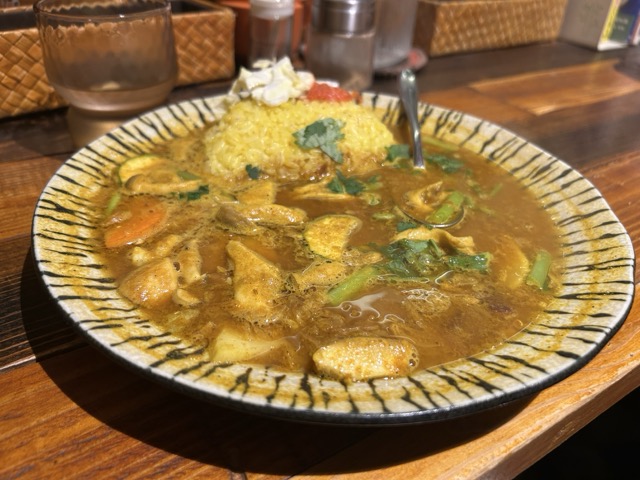 Soup Curry, a variable “Ship of Theseus” dish at this point.
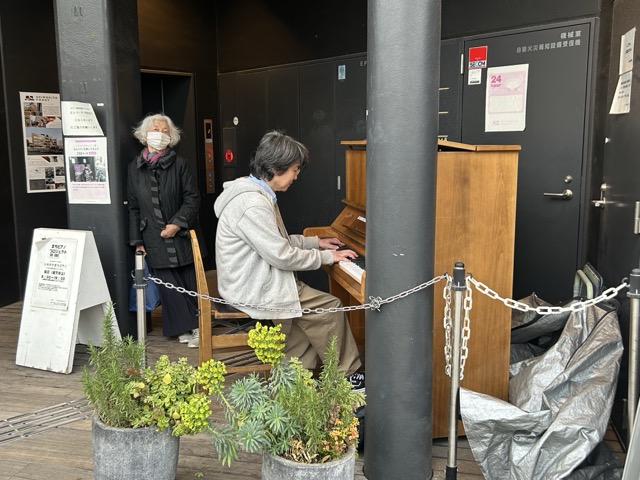
And the music, it was everywhere! I saw Hip-hop street performances and heard jazz standards booming out of basement bars with scarcely enough room for 20 people. Co-working corners of bookshops played Miles Davis’s ‘Kind of Blue’ while students and professionals tapped on their laptops. Austin Texas arrogantly professes itself as the “Live Music Capital of the World”, but I think this neighborhood could give dirty-6th a run for its money. Even the patrons in the music shops testing out the keyboards were freestyling harmonies that take years of practice to perform with like it was easy. It’s not the taste that blew me away, it was the talent.
The closer I look, the closer I see a background hum of talent everywhere I go. The musicians are talented sure, but I have a bit more of an ability to spot that I suppose. The artists selling paintings in corner shops have talent too. The same painting at middle-price here would be the best in the shop in many of the studio tours I go on. Even the way a retail store clerk wrapped up a sweater for a customer was a startling display of precision. It feels like everyone here is practicing something away from public eye before they ever allow themselves to do it in public.
No one exhibited this better than my Sushi Chef, Mr. Fukumoto.
Omakase with Fukumoto
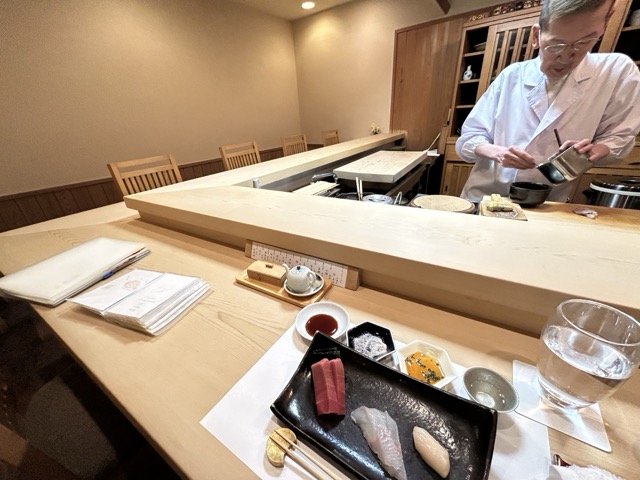
Fukumoto-san, pictured above, has been preparing sushi for 40 years, earning him recognition internationally as one of the best there is. I’d been saving some of my food budget leading up to this night so I could watch a master in action, and by sheer luck I was able to enjoy it as the only guest at the table for the night. The chef stayed just about silent the whole night, allowing his 28 year old protégé Yuto to handle answering my questions like the pesky tourist I am. Fukumoto-san himself remained in a resting bowing position with his head tipped towards me until it was time to start preparing food, only speaking to say the Japanese name for a given fish before resuming his bow.
Meals like this remind me of flying in an odd way; I surrender to this pilot who knows what he’s doing and am at the mercy of his decisions. If he decides the next course is sea-urchins, that’s what I’m eating. The menu does not list options, but serves as a document cataloguing what has come and what will come next. Perhaps it’s outside my comfort zone, but I have never eaten food so fresh. They demonstrated that the clams I was enjoying were still alive by sprinkling them with salt to make them reflexively pull themselves inwards. While I can’t say I’m a huge fan of urchins or sea cucumbers, I would never had known a love for mackerel or for sword-tipped squid head without letting Fukumoto-san take the wheel. I was grateful for both the attention, the meal, and for the practice in speaking Japanese with Yuto by the end.
Coffee with Locals
The highlight of my time here was getting coffee with two locals named Kiyoka and Miyu. These two young professionals were childhood friends as gradeschoolers in New York City before parting ways as kids and eventually reconnecting and becoming friends again in Tokyo years later. Anyone who knows me knows I’m a sucker for sweet stories like this. Also, talking about talent, these two have it in droves. Competitive gymnastics, business/economics achievements, professional violin, neuroscience and more all while being flawlessly bi-lingual (I think, I didn’t ask how many languages they spoke but it’s at least two). These two friends let me pester them with nosy questions for hours and I could not be more grateful for their hospitality and what they had to teach me.
Turns out, I was right to think everyone’s secretly practicing stuff away from the public, but not always in their homes. Miyu told me she’s not allowed to practice violin at home so she (and many other musicians) rent out rooms at cheap 24-hour karaoke bars. “No one is singing on the machines, they’re all practicing music,” she told me. Not sure how any of them find time for sleep when building up their skills and balancing a career but it’s inspiring to see.
Of course I asked them about AI. Given our thing here, how could I not? They both gave me answers I’ve heard from other folks their age: either “It’s a good brainstorming tool” or “I don’t use it much at all.” It’s clearly on their minds, but not an active force making their lives much easier/better. While this is very similar to what I’ve heard stateside, it validates the take to hear it from smart people from such a different culture.
I asked them about how they define success, as however that might be defined in Japan. Kiyoka told me that in Japan they generally “don’t encourage out-of-the-box thinking,” when comparing to her experience in the states. “There are rigid boxes” that form pathways that are largely considered to be the correct paths that, if followed closely, will naturally lead to success. After learning more about how much work goes into making and fitting into those boxes, I see why. The entrance exam to a pre-k program can largely cement college admittance later on because the program is actually sponsored by the University. Imagine New Jersey parents training their 3-year olds to pass the entrance exam for a Princeton-affiliated pre-school. They call this an escalator school, I later found out, and it’s expensive. The alternative of cram-school and wild pressures on extracurriculars makes grade school seem like a grueling slog of dedication and achievement at the youngest age. If my parents and I went through all that to land me in a successful box, I’d probably defend that box pretty fiercely.
Something Miyu said about entry-level work was striking as well. She’d worked at a large multi-national consulting firm here in Tokyo and mentioned that as an associate or even before, you’re expected to work the elevator. For a split-second, I thought the term ’elevator’ was a metaphor for something, but she meant the actual elevator. The most junior person is in charge of the buttons and the most senior person stands in a specific spot. “You have to time hitting the close-door button so that it closes right as they bow their heads,” she explained. Too early or too late suggests different kinds of issues, and when clients are in the elevator the display is even more vital. “The hierarchy is rigid,” Kiyoka explained. They have to demonstrate to clients that even their most junior employees are trained in business manners so that when they get to the higher-ups, the impression is one of a tight ship they should want to do business with.
This reminded me of an esoteric story from rock and roll history. Have you ever heard of the story of the “brown M&Ms” in Van Halen’s rider? 80’s rock legends Van Halen famously had a rider (performance contract) that featured in their list of demands of the venue that a bowl of M&M be placed in the green room with all the brown ones removed. At the time, this came off as rampant diva excess and boyish unreasonable demands. But the truth was that the bowl of candy served as a proxy to make sure the venue actually read through the contract line-by-line. If there were brown M&Ms in the bowl, they’d re-check the setup and usually find an error that could have ended with their guitarist falling from his trapeze wire or all-out set collapse.
Miyu smiled as she’d heard this legendary story too and knew where I was going with it. The business culture around perfection at the bottom can serve as the M&M bowl for clients. If their associates aren’t trained, how can we trust their advice on a $100M acquihire? The implied assumption here is that perfection at the bottom implies perfection at the top, and that assumption would only hold true in a culture where pathways to success are clear-cut and full of rigid boxes. Granted, this isn’t always true and I’m sure there are examples of companies that use perfectionism at the bottom to mask incompetence at the top, but the display is there either way. “It’s a narrative,” Miyu said. Different cultures tell different stories that lead us to these differences in business norms.
In the US, our culture celebrates taking a new path away from what was pre-destined as part of our narrative. Admittedly, this hierarchical in-the-box channel to success is also here in the US too, especially in businesses like corporate law and investment banking. Those folks are made to pay their dues just the same. But “the mythos” isn’t about the people who rise up the ranks they were meant to. The craziest success stories here often start with someone quitting something else. The oft-abused example is that Steve Jobs / Bill Gates / Mark Zuckerberg all dropped out of college to start their businesses. Young entrepreneurs who left large paychecks to start their own firm are heroes of capitalism whereas most people who inherit a business from their parents can be seen as “nepo-babies,” even if it’s a small business. We seem eager to see the ways in which people ditched their box, which has it’s own upsides and downsides I suppose.
Finally, the biggest thing I took away from these two brilliant Tokyoites was not how we’re different but rather how we’re similar. Our issues rhyme on both sides of the Pacific; old men run the world, childcare is too expensive, old models/success paths don’t work anymore, not enough hours in the day, and it’s hard to find genuine connection with people when everyone’s online. We all seem to love traveling the world and sharing excellent food. A good book is a good book in multiple languages. We’ve got big ideas for what to do next with our lives and are trying to make more time to see friends in person regularly. I left this coffee-chat wishing I could hear more and promised to come back to Tokyo to buy them as much coffee as they want as long as they keep sharing.
Tokyo is leaving me wanting more, but there’s much more Japan to see.
Comments
Want to leave a comment? to join the conversation.
Leave a Comment
Loading comments...